
Variable Water Flow (VWF) systems explained
VWF systems vary chilled water flow to match cooling demand, cutting pump energy in large central plants. Here is how they work and where they fit.
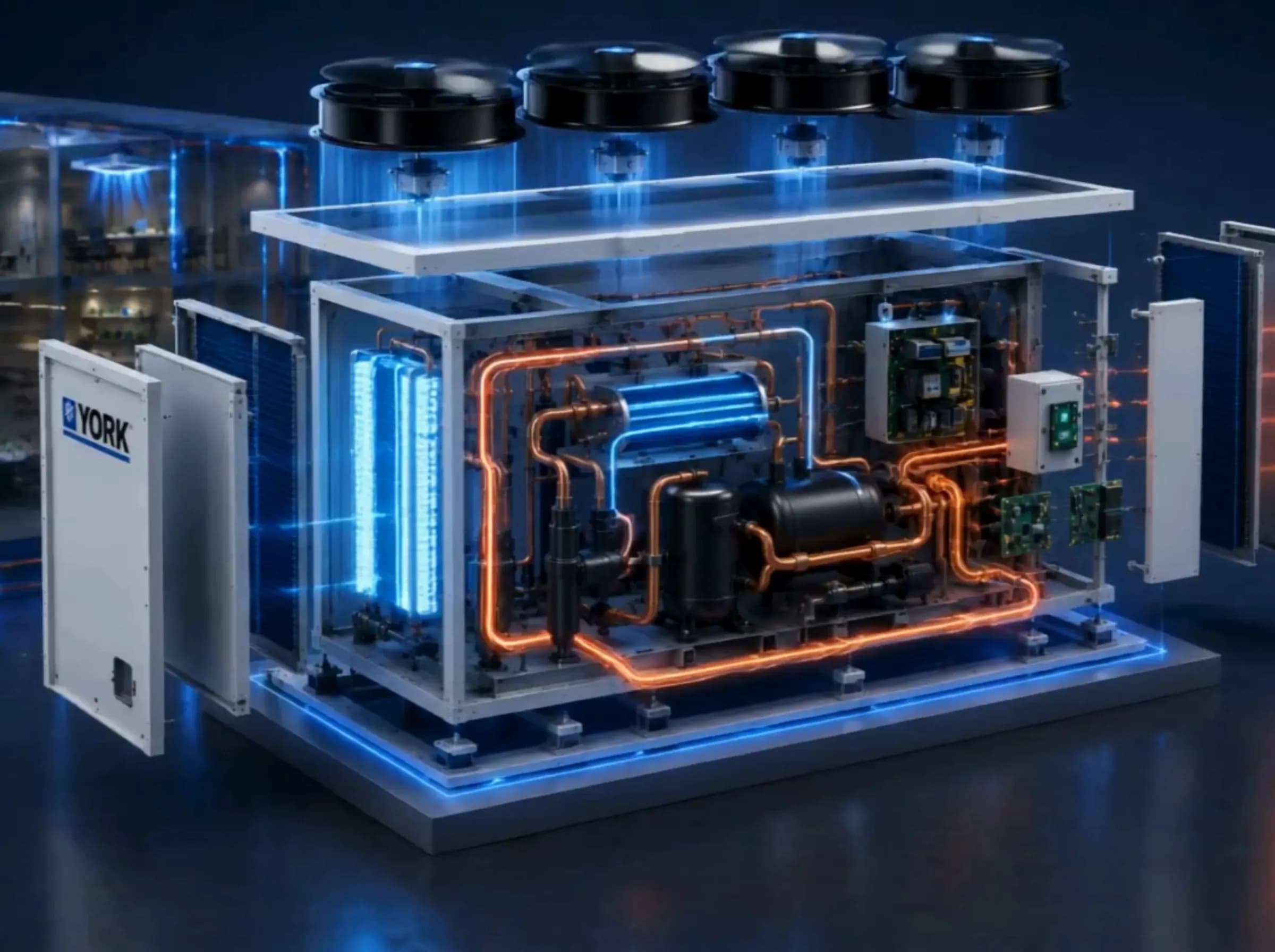
A Variable Water Flow system is a central chilled water plant where variable speed pumps and chillers change the volume of water they move to match the building load in real time, instead of pumping a fixed amount. Because pumping power falls sharply as flow drops, VWF cuts energy at part load, which is where buildings run most of the year.
How VWF works
A variable speed chiller adjusts its output to the actual load. Variable speed pumps, driven by VFDs, slow down when less cooling is needed, while two way valves at each air handler throttle to demand. A building management system reads the load and trims flow and temperature continuously.
VWF and VRF, in one line
VWF varies water flow in a central plant. VRF varies refrigerant flow in distributed units. Choose VWF when one central plant serves a large building and pump energy is the prize, and VRF when zone control and a compact footprint matter more.
Where VWF fits
Large commercial towers, hospitals, malls, corporate campuses and IT & server rooms running on a central chilled water plant.
FAQ
Does VWF save energy?
Yes. With variable speed pumps and chillers, plant energy can drop meaningfully at part load compared with a constant flow design.
What equipment does VWF need?
Variable speed pumps, a variable flow chiller, two way control valves, and a BMS to tie it together.
Planning a central plant? Request a site survey and we will size the VWF system around your building.