
Chiller plant vs VRF for large commercial buildings
For large commercial buildings, should you choose a chiller plant or VRF? Compare efficiency, cost, footprint and maintenance before you commit.
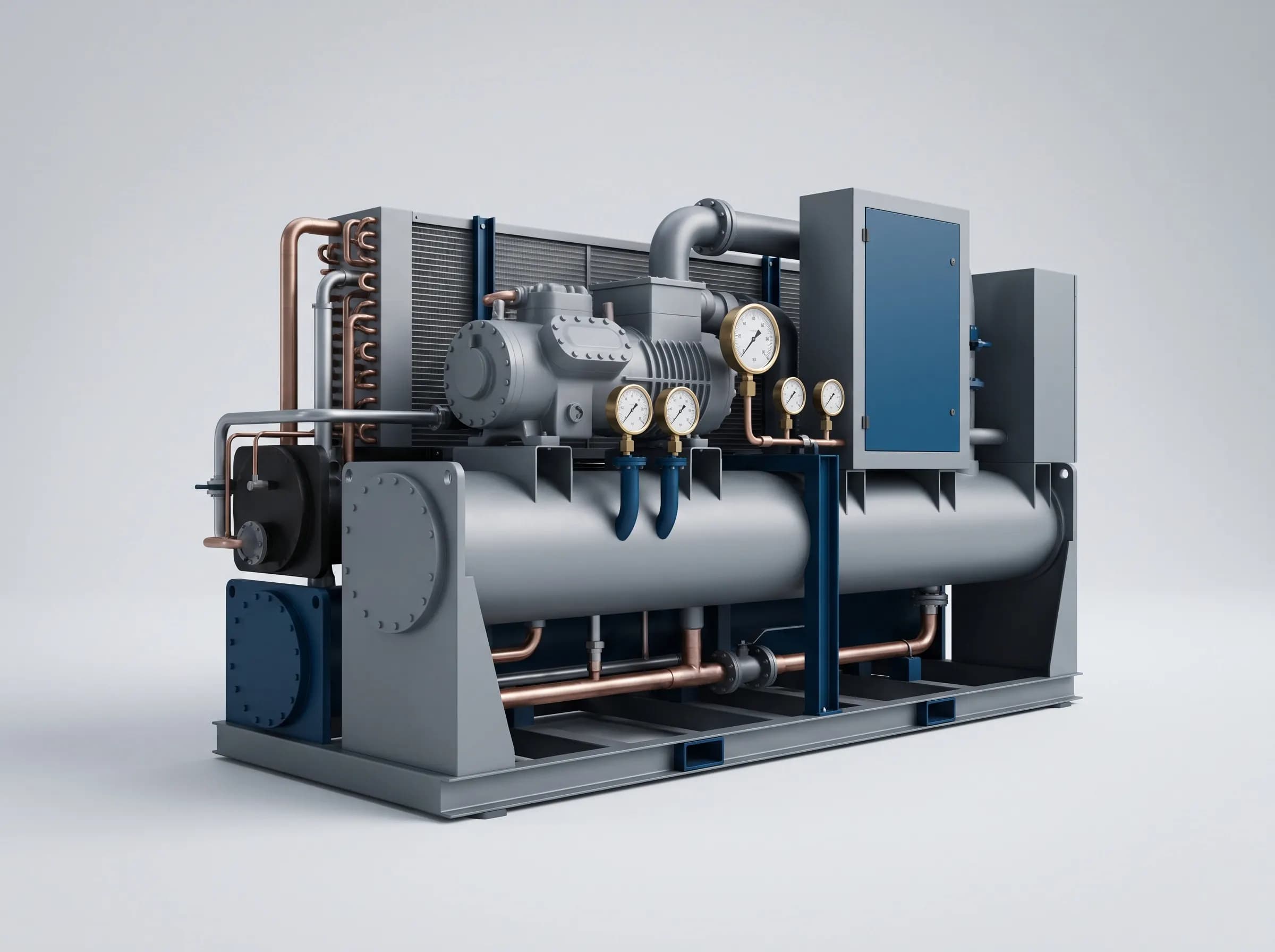
For very large or high load buildings, a central chiller plant is usually the more efficient and maintainable choice. VRF is excellent up to medium and large loads where zone control and a compact footprint matter more than raw scale. The crossover depends on total TR, the number of zones, and how the building is used.
When a chiller plant wins
Above roughly 100 TR, or for hospitals, malls, hotels and campuses, a central chiller plant serves large loads efficiently from one plant room, with strong part load performance when paired with variable water flow.
When VRF wins
Offices, showrooms, hotels and premium homes that need independent temperature per zone, quiet operation and no dedicated plant room. VRF also scales in phases as a fit out grows.
Quick comparison
- Best fit size: chiller for very large loads, VRF for small to large zoned buildings
- Footprint: a chiller needs a plant room, VRF units are compact
- Zoning: chiller via air handlers, VRF per indoor unit
- Maintenance: both need a planned AMC with trained technicians
If you are still working out the tonnage rather than the architecture, start with what TR means and how to size it.
FAQ
Can one building use both?
Yes. Many large projects mix a chiller plant for the base load with VRF for specific zones.
Which is cheaper to run?
At large scale and part load, a well designed chiller plant, especially with variable water flow, is very efficient.
We design both. Request a site survey and we will recommend the right architecture for your building.